Fossil Watch Instructions Manual: A Comprehensive Guide
This comprehensive guide details setting time, using chronograph functions, battery replacement, and strap adjustments for various Fossil watch mechanisms, ensuring optimal performance.
Understanding Your Fossil Watch
Fossil watches encompass diverse mechanisms – quartz, automatic, and chronograph – each requiring specific operational knowledge. Recognizing your watch’s type is crucial for proper use and maintenance. Many Fossil models feature screw-down crowns, enhancing water resistance but needing unscrewing before adjustments.
Understanding these features, alongside water resistance ratings, ensures longevity. Downloadable manuals from Fossil’s website provide detailed troubleshooting and operational guidance if your physical copy is lost. Familiarizing yourself with these resources empowers you to maintain your watch effectively, preserving its functionality and style for years to come.
Locating Your Watch’s Manual
If you’ve misplaced your physical Fossil watch manual, readily available digital resources exist. Fossil’s official website offers downloadable manuals for nearly all models, providing comprehensive instructions and troubleshooting assistance. Searching by model number ensures you find the correct guide.
Alternatively, specific model manuals, like the Argos Product Fossil Neutra Chronograph (867/5358), can be found in PDF format online. These digital versions mirror the physical manuals, detailing time setting, chronograph operation, and care instructions. Utilizing these resources guarantees access to essential information for optimal watch performance and maintenance.
Types of Fossil Watch Mechanisms

Fossil watches employ diverse mechanisms, each requiring specific operational knowledge. The most common are quartz movements, powered by a battery for precise timekeeping. Automatic movements, conversely, are mechanically driven by the wearer’s motion, needing no battery.
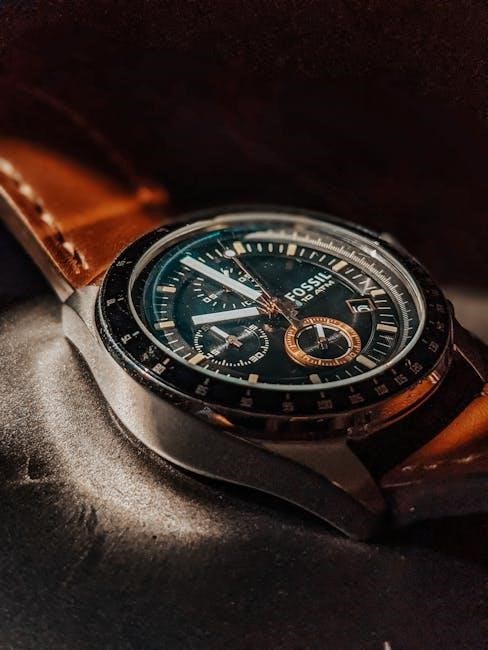
Chronograph movements represent a more complex type, incorporating stopwatch functionality alongside standard timekeeping. Understanding your watch’s mechanism is crucial for proper use and maintenance. Fossil’s patented mechanisms, like those featuring a semi-circular rotor, demonstrate their innovative approach to watchmaking, demanding tailored operational techniques.
Quartz Movement Instructions
Fossil quartz watches are renowned for their accuracy and reliability. These timepieces operate using a battery to power a quartz crystal oscillator. Generally, quartz watches require minimal maintenance beyond periodic battery replacements.
To set the time, pull the crown out to the first position and rotate it to adjust the hour and minute hands. Ensure the crown is fully pushed back in to maintain water resistance. Screw-lock crowns, if present, must be unscrewed before adjustment. Regular checks ensure consistent, precise timekeeping from your Fossil quartz watch.
Automatic Movement Instructions
Fossil automatic watches are powered by the motion of your wrist, eliminating the need for batteries. The patented Fossil mechanism features a semi-circular rotor that winds the mainspring with natural movement.
Initially, or after periods of inactivity, manually wind the crown 30-40 times to start the watch. To set the time, pull the crown out to the first position. Automatic watches typically do not have a second-setting position. Ensure the crown is fully pushed back in. Consistent wear keeps the watch running; otherwise, it may stop and require rewinding.
Chronograph Movement Instructions
Fossil chronograph watches feature stopwatch functionality alongside standard timekeeping. These watches often have multiple sub-dials for measuring seconds, minutes, and hours. Before setting the time or date, unscrew the crown if applicable – ensuring water resistance.

Typically, the top pusher starts and stops the chronograph, while the bottom pusher resets it to zero. The central seconds hand acts as the chronograph seconds counter. Familiarize yourself with your specific model’s layout, as button functions can vary. Proper use ensures accurate timing and extends the watch’s lifespan.
Setting the Time on Your Fossil Watch
Adjusting the time on your Fossil watch depends on the movement type. For watches with screw-down crowns, carefully unscrew it before proceeding – this is crucial for maintaining water resistance. Gently pull the crown out to the first position to adjust the date (if applicable). Pulling it further to the second position allows time adjustment.
Turn the crown to move the hands until the correct time is displayed. Remember to synchronize the date change with the correct time of day. Once set, push the crown fully back in and, if applicable, screw it down tightly to restore water resistance.
Unscrewing the Crown (If Applicable)
Many Fossil watches feature a screw-down crown, enhancing water resistance. Before adjusting the time or date, this crown must be unscrewed. Locate the small indentation on the crown’s side. Using a fingernail or a soft tool, gently rotate the crown counterclockwise. Avoid excessive force; it should unscrew smoothly.
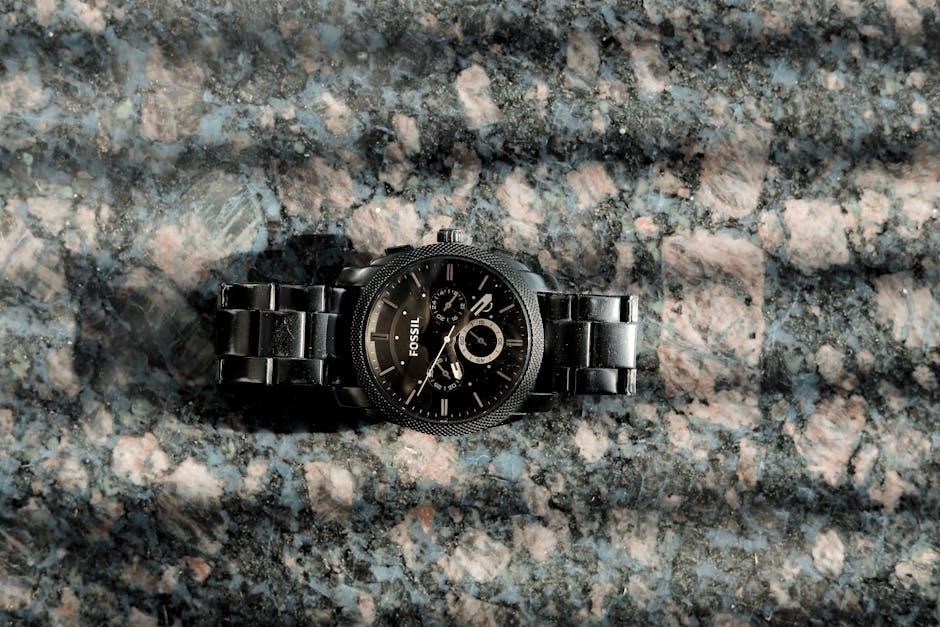
Once unscrewed, the crown can be pulled out to the appropriate position for time and date setting. Crucially, remember to screw the crown back down firmly after adjustments to maintain the watch’s water resistance. Failure to do so can lead to internal damage.
Adjusting the Time and Date
With the crown unscrewed and pulled out to the first position (usually a click), rotate it to adjust the hour and minute hands. Ensure you move the hands clockwise to avoid damaging the movement. For watches with a date function, pulling the crown out to a second position allows date adjustment. Rotate the crown to set the correct date.
Some models may require holding a button while adjusting the date. Always double-check the date changes correctly through the entire month. Once set, push the crown back in and screw it down securely to maintain water resistance.
Using the Chronograph Function
Fossil chronograph watches feature stopwatch functionality. Typically, the top button starts and stops the chronograph timer, while the bottom button resets it to zero. Pressing the top button initiates the seconds hand’s movement, measuring elapsed time. Sub-dials often display minutes and hours recorded by the chronograph.
To accurately use the chronograph, familiarize yourself with your specific model’s button configuration. Remember to reset the chronograph after each measurement. Understanding these functions enhances your watch’s utility beyond simply telling time, offering precise timing capabilities.
Starting, Stopping, and Resetting the Chronograph
To start the chronograph, firmly press the top push button; the seconds hand will begin moving, indicating elapsed time. Pressing the same button again will stop the timer, freezing the seconds hand. The chronograph continues to record elapsed time even when stopped.
To reset the chronograph to zero, press the bottom push button. This simultaneously resets all chronograph indicators – seconds, minutes, and hours – preparing the function for a new measurement. Ensure a firm, deliberate press for accurate resetting. Practice these steps to become proficient with your Fossil watch’s chronograph.
Water Resistance Explained
Fossil watches are categorized by water resistance levels, ranging from splash resistance to suitable for swimming or diving. Understanding these ratings is crucial for preventing water damage. A rating of 50m/5ATM resists splashes and brief immersion, while 100m/10ATM is suitable for swimming. Deeper ratings, like 200m/20ATM, are designed for diving.
Maintaining water resistance requires periodic checks of the crown and seals. Ensure the crown is fully screwed down (if applicable) before water exposure. Avoid using the chronograph or pushers underwater unless the watch is specifically designed for it. Regular professional servicing is recommended to preserve water resistance.
Understanding Water Resistance Ratings
Water resistance is measured in atmospheres (ATM) or meters (m). However, these values don’t indicate actual diving depths. 30m/3ATM signifies splash resistance only – avoid immersion. 50m/5ATM withstands brief immersion, like handwashing, but not sustained swimming. 100m/10ATM is suitable for swimming and snorkeling, while 200m/20ATM or higher is for scuba diving.
Important note: Water resistance isn’t permanent. Seals age and can be compromised by impacts. Pressure testing during servicing verifies continued protection. Avoid exposing a watch to extreme temperatures or detergents, as these can damage seals and reduce water resistance.
Maintaining Water Resistance
To preserve your Fossil watch’s water resistance, regularly inspect the crown and pushers, ensuring they screw down tightly (if applicable). Avoid operating them underwater. Rinse your watch with freshwater after exposure to saltwater or chlorinated water to prevent corrosion.
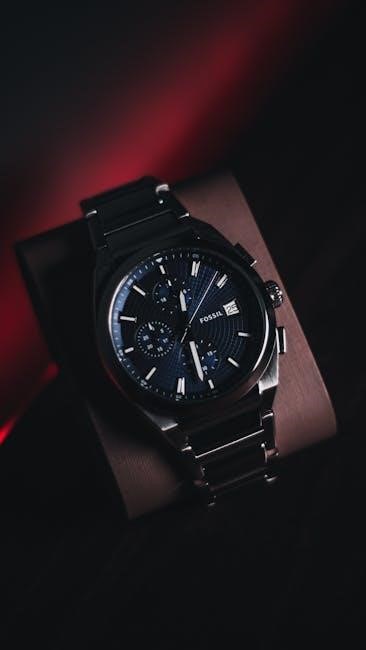
Furthermore, have the seals checked and replaced during routine servicing – typically every 1-2 years. Avoid exposing the watch to extreme temperatures, strong chemicals, or high-pressure washing. Damage from improper care voids the water resistance guarantee. Remember, water resistance isn’t a lifetime guarantee.
Changing the Battery
Battery replacement in your Fossil watch requires precision. Identifying the correct battery type is crucial; consult the watch’s caseback or a Fossil service center. Professional replacement is strongly recommended to avoid damaging the movement or compromising water resistance.
Attempting a DIY battery change without proper tools and knowledge can lead to complications. A qualified watch technician will ensure a secure seal and accurate timekeeping. Improper handling may void any existing warranty. Always dispose of old batteries responsibly, following local regulations.
Identifying Battery Type
Determining the correct battery for your Fossil watch is essential. Often, the battery type is engraved on the watch’s caseback. Common types include silver oxide and lithium batteries, with designations like SR626SW or CR2032.
If the caseback doesn’t display this information, consulting the original watch manual or contacting Fossil’s customer support is recommended. Using an incorrect battery can damage the movement or prevent the watch from functioning correctly. Always verify the specifications before purchasing a replacement.
Professional Battery Replacement Recommended
While some users may attempt DIY battery replacements, Fossil strongly recommends professional service. Improper handling can damage the watch’s delicate internal components, potentially voiding any warranty. A skilled watch technician possesses the correct tools and expertise to safely open the case, remove the old battery, and install a new one.
Furthermore, professionals will also check the gasket and ensure proper resealing to maintain water resistance. This preventative maintenance helps prolong the life of your Fossil watch and guarantees continued accurate timekeeping. Avoid risks and choose expert care.
Strap and Bracelet Adjustments
Achieving a comfortable and secure fit is crucial for enjoying your Fossil watch. For bracelets, removing or adding links allows for personalized sizing. Typically, this involves using a spring bar tool to carefully release and reposition the pins holding the links together. Ensure you work on a protected surface to avoid scratching the bracelet.
If replacing the strap, select a compatible size and style; Utilize a spring bar tool to detach the old strap and carefully attach the new one, ensuring the spring bars are securely seated in the lugs. Proper adjustment enhances both comfort and the watch’s aesthetic appeal.
Removing and Adding Links
To adjust a Fossil bracelet, you’ll generally need a spring bar tool. Carefully insert the tool’s forked end between the link and the lug, compressing the spring bar. Gently push the spring bar out enough to release the link. Repeat on the opposite side.
Adding links is the reverse process: position the link, compress the spring bar with the tool, and carefully guide it into the lug holes. Ensure the spring bar clicks securely into place on both sides. Work on a soft surface to prevent scratches, and proceed slowly to avoid damaging the bracelet;
Replacing the Strap
To replace a Fossil watch strap, you’ll typically need a spring bar tool. Locate the spring bars holding the strap to the watch case. Insert the tool’s forked end between the strap and the lug, compressing the spring bar. Gently push it enough to release the strap.
Align the new strap with the lugs and compress one spring bar at a time, guiding it into the corresponding hole. Ensure it clicks securely into place on both sides. Verify the strap is firmly attached before wear. Consider professional assistance if you’re uncomfortable with the process.
Troubleshooting Common Issues
If your Fossil watch isn’t running, check the battery – a common culprit. For quartz watches, a replacement is usually needed. If a chronograph isn’t functioning, ensure the crown isn’t screwed down (if applicable) and try resetting it. Sometimes, a simple reset resolves the issue.
For persistent problems, consult Fossil’s website for downloadable manuals or contact customer support. Remember to check water resistance before exposing the watch to water. Ignoring this can lead to internal damage. Professional repair is recommended for complex issues.
Watch Not Running
If your Fossil watch has stopped, the most frequent cause is a depleted battery, particularly in quartz movements. First, verify the crown is fully pushed in. For watches with screw-down crowns, ensure it’s tightened properly after setting the time. If the issue persists, a battery replacement is likely necessary.
Attempting to open the watch yourself can cause damage; professional replacement is highly recommended. Automatic watches may require manual winding if unworn for an extended period. Check for any visible obstructions hindering the hands’ movement. Consult the manual for specific troubleshooting steps.
Chronograph Not Functioning
If your Fossil chronograph isn’t recording time correctly, ensure the chronograph pushers are fully engaged when starting, stopping, and resetting. Sometimes, a slight misalignment can prevent proper function. Verify the watch has sufficient battery power, as low power can affect chronograph accuracy. Also, confirm the crown is fully pushed in, as accidental adjustments can interfere.
If the issue continues, gently try pressing the pushers a few times to dislodge any potential debris. Avoid forceful pressing. Professional servicing may be needed if the chronograph mechanism is damaged or requires cleaning. Refer to your watch’s manual for specific instructions.
Fossil Watch Care and Maintenance
To preserve your Fossil watch’s appearance and functionality, regular cleaning is essential. Use a soft, damp cloth to wipe the case and strap, avoiding harsh chemicals or abrasive cleaners. For leather straps, occasional conditioning will maintain their suppleness. Ensure the crown is securely tightened after each use, especially if the watch has water resistance.
Periodically check the crystal for scratches and consider professional polishing if needed. Avoid extreme temperatures and strong magnetic fields, which can affect movement accuracy. Regular battery replacements (for quartz models) are crucial for consistent performance. Proper care extends the life of your timepiece.
Downloading Digital Manuals from Fossil’s Website
Fossil’s official website provides a valuable resource for accessing digital versions of watch manuals. If you’ve misplaced your physical copy, or prefer a digital format, this is an excellent solution. Navigate to the Fossil support section and utilize the search function, entering your watch’s model number.

Downloadable PDFs are readily available for most models, offering detailed instructions and troubleshooting guidance. These resources are particularly helpful for understanding specific features and ensuring proper operation. Accessing the manual online eliminates the need for physical storage and ensures you always have the information at your fingertips.